

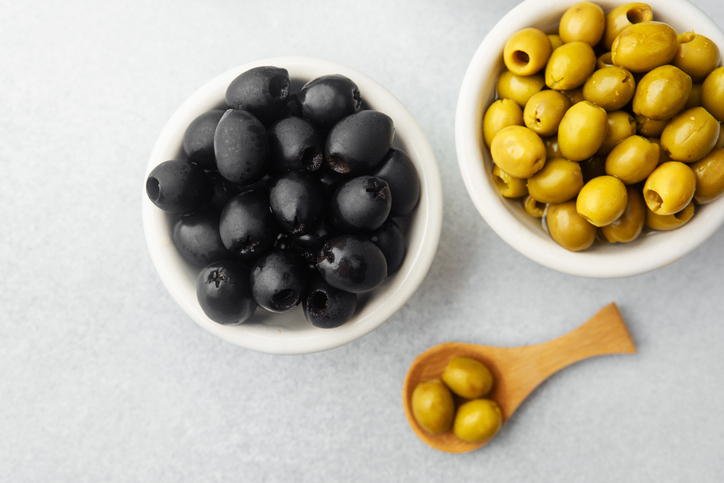
At first glance, the difference between a green olive, a black olive and a stuffed olive may seem to lie only in their colour or presentation. However, behind each one there is a specific harvesting stage, a production process and a different way to enjoy this fruit, so closely linked to the Mediterranean diet.
Green olives are harvested before the fruit begins to change colour, once it has reached its normal size but while the flesh is still firm. This firmness is one of their main advantages: it allows the olive to be handled properly during the curing, pitting or stuffing process, while helping to maintain a pleasant texture on the palate.
Black olives are not olives that are picked black from the tree, but green olives that acquire this colour through a controlled process of oxidation. During this preparation, the olives are subjected to specific conditions that gradually darken the fruit until it reaches its characteristic black colour. The product is then stabilised through suitable preservation treatments to ensure food safety and maintain its qualities until consumption.
Olives naturally have an intense bitterness, which is why they need to go through a preparation process before reaching the consumer. Depending on the type of olive and the desired result, this may involve stages such as washing, treatment to reduce bitterness, fermentation in brine, selection, grading, packaging and thermal preservation treatments.
And what about stuffed olives? In reality, they are not a category defined by colour, but by presentation. They are pitted olives filled with an edible ingredient, such as pepper, almond, garlic or other fillings. Green olives are the most commonly used for stuffing because their firm texture makes pitting easier, withstands handling better and offers a balanced contrast between the flavour of the olive and that of the filling.
For this reason, rather than talking about one olive being “better” than another, it is more appropriate to talk about uses, tastes and moments of consumption. Green olives stand out for their firmness and versatility; black olives for their mild flavour, uniform colour and presence in recipes, salads and appetisers; and stuffed olives for bringing variety, flavour and convenience to every bite.
At Hutesa, understanding each type of olive and controlling every stage of the process is key to offering a product with the right balance of flavour, texture, safety and quality.
