

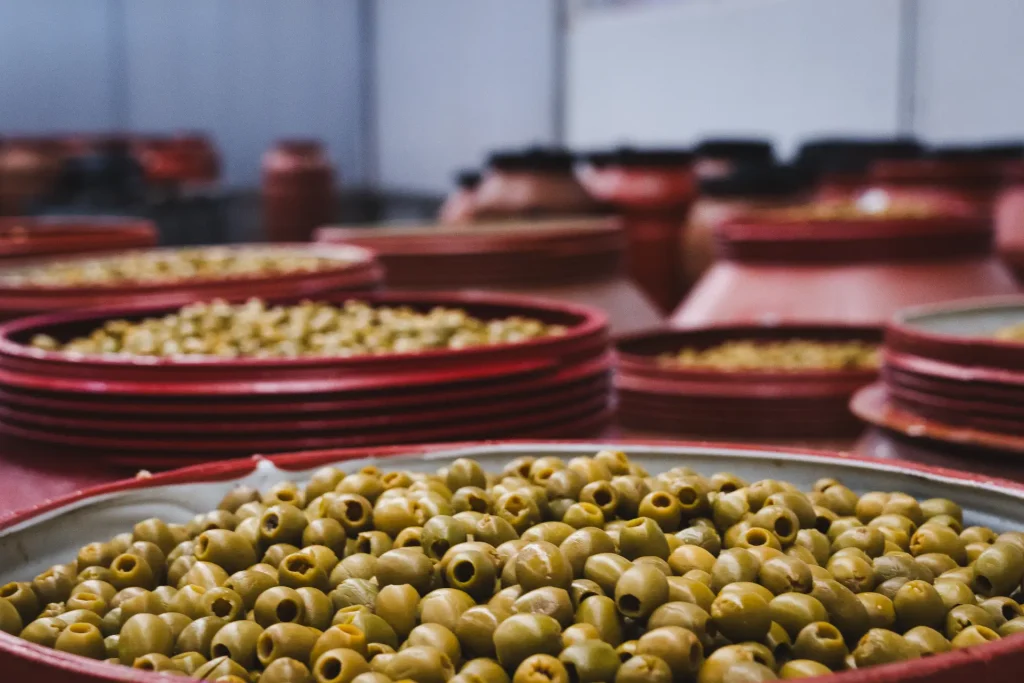
Table olives are an essential element of the Mediterranean diet, enjoyed for their flavor, versatility, and nutritional value. However, behind each olive lies a wide spectrum of varieties, formats, and preparation methods that determine their taste, texture, and usability in different contexts. For olive enthusiasts, it is essential to understand the differences between the types of table olives available on the market, both to better appreciate them and to choose the most suitable one for each occasion.
Table Olive Varieties
Spain, the cradle of table olives, is the leading producer of olives for direct consumption. Among the most prominent varieties are Hojiblanca, Manzanilla, and Gordal, each with distinctive characteristics in flavor, texture, and usage.
- Hojiblanca: One of the most recognized varieties in the world of table olives. Its flavor is balanced, with a slightly fruity and mildly bitter note. Hojiblanca is ideal for producing green olives, both whole and pitted. This variety is characterized by its thin skin and firm flesh, making it a popular choice for stuffing with ingredients such as almonds or garlic.
- Manzanilla: A small, round olive highly appreciated for its mild and slightly salty taste. Native to the Cádiz region, Manzanilla is commonly marketed as a green olive, with tender texture and a flavor that evokes the freshness of Andalusian olive groves. It is mainly consumed as an appetizer or as an accompaniment in salads.
- Gordal: Known for its large size and thick flesh, making it ideal for consumption in various formats, such as whole or stuffed. Its flavor is mild, but the meaty texture distinguishes it from other varieties. Gordal olives are especially popular in international markets due to their impressive size and ability to accommodate a variety of fillings, from almonds to chili.
Formats and Preparation
Table olives are differentiated not only by variety but also by the formats and preparation processes they undergo before reaching the consumer. The main formats include whole, pitted, stuffed, and sliced olives, each suitable for different uses.
- Whole: Traditional whole olives are consumed as they are, either green or black. They are ideal for those who appreciate firm texture and authentic flavor.
- Pitted: These olives undergo a pitting process that facilitates consumption, especially in dishes requiring incorporation into salads or tapenades. Pitted olives also allow greater versatility for stuffing with ingredients such as garlic, almonds, or peppers.
- Stuffed: Stuffing is an artisanal process mainly applied to Gordal and Hojiblanca varieties, incorporating ingredients such as almonds, fresh garlic, or chili. This format is especially popular in international markets, where flavor combinations and innovation are highly valued.
- Sliced: Sliced olives are commonly used in cooking as ingredients for pizzas, salads, or sauces. This format facilitates inclusion in recipes and is ideal for foodservice, allowing quick preparation and presentation.
Differences in Preparation: Processes and Quality
The preparation process of olives is key to determining their flavor and texture. Olives go through various treatments, such as washing, cooking, fermentation, selection, and calibration, to ensure that each batch reaches its optimal taste and texture. Additionally, processes such as pasteurization and sterilization reinforce food safety and keep the olives free of pathogenic microorganisms.
Conclusion
Table olives are not only a delicious and healthy ingredient but also a product with a wide range of varieties and formats that can be adapted to different tastes and needs. Whether you prefer Hojiblanca stuffed with almonds or sliced Manzanilla, olives offer an option for every palate. Thanks to constant innovation and careful production processes, table olives remain an integral part of Mediterranean cuisine and appreciated worldwide.
